|
Arrow Throwing
with a powerful jerk of the arm cast it forward and high as if throwing
a stone, its line of flight being at an angle of 45 degrees to the ground.
Though the movement of the arm in the act of throwing should be chiefly
below the top of the shoulder, yet the arrow should be projected upwards
as it leaves the hand, G, fig. 176.
If the arrow is inclined to one side or other of the shoulder just as
it is thrown, it will only travel an erratic course of a hundred yards
or so.
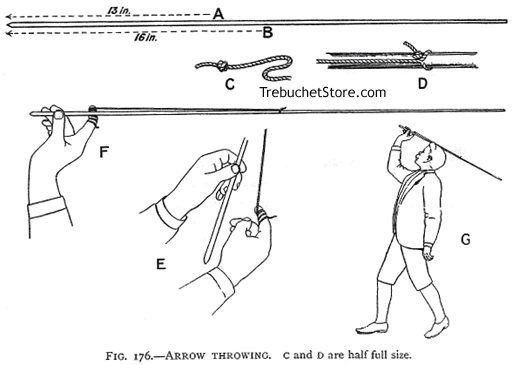
Fig 176. - Arrow Throwing. C and D are half full size.
As the arrow flies away the knotted end of the string drops off its
shaft.
The propelling power is derived entirely from the first finger, which
gives the arrow its impetus by pulling sharply against the tightly stretched
string as the arm is jerked forward.
The second and third fingers and the thumb merely retain the arrow in
position, whilst the first finger exerts the force that propels it.
The difficulty with beginners is, to avoid gripping the arrow between
the second and third fingers and the thumb at the moment when it should
leave the hand. This, of course, prevents the first finger applying its
force to the string, with the result that the flight of the arrow is completely
checked. |